Written by Scott Schreeg | Plant Maintenance
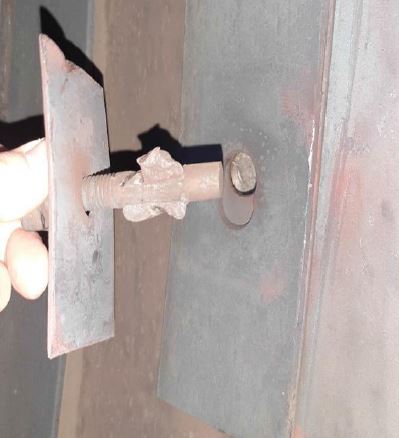
During outage inspections, maintenance teams occasionally discover loose liner studs, broken attachments, or distorted liner sections inside exhaust ducts. At first glance, these issues may appear isolated and repairable. In reality, recurring stud failures in scallop plate liner systems are often early warning signs of larger reliability concerns developing inside the exhaust system.
For HRSGs and gas turbine exhaust systems operating at high temperatures and under turbulent flow conditions, scallop plate liner failures can develop into more serious maintenance problems if the underlying causes are not properly addressed. What starts as a small attachment failure can eventually contribute to liner instability, liberated hardware, casing hot spots, and repeated outage work.
What Is a Scallop Plate and Why Does It Matter?
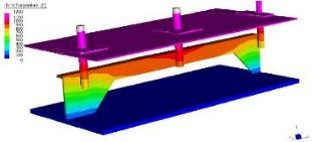
In this type of system, the scallop plate sits beneath the liner while studs pass through the liner sheets and attach to the support structure below. The liner itself is designed to “float” as temperatures change during operation, helping protect the outer casing from excessive heat exposure.
These systems are often used in:
- Round exhaust ducts
- Turbulent transition sections
- Areas near turbine exhaust outlets
- High-temperature HRSG applications
When properly designed and installed, scallop plate liner systems provide durability and thermal protection in some of the harshest areas of the exhaust path. However, certain design or attachment issues can create long-term reliability concerns.
Why Are Broken Stud Attachments a Common Failure?
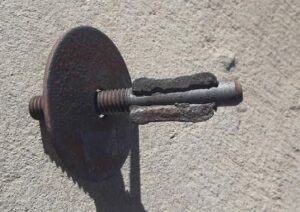
In many cases, the stud separates from the scallop plate while the washer and nut remain attached to the liner. During inspections, maintenance personnel may even be able to physically pull failed studs from the liner system.
Although isolated failures can sometimes be repaired successfully, multiple failures in the same duct section often indicate a broader stress issue within the liner system.
Once attachment failures begin spreading, several operational risks can follow:
- Increased liner movement and vibration
- Loose hardware entering the exhaust gas flow
- Progressive liner deterioration
- Insulation displacement
- Elevated casing temperatures
- Potential downstream component damage
Because these failures often occur in high-turbulence sections of the exhaust system, deterioration can accelerate quickly once the liner begins losing structural support.
Why Are These Failures Difficult to Repair?
One challenge with scallop plate repairs is that the liner system itself often restricts access to the failed attachment area. In many cases, sections of liner must be removed before proper weld repairs can be completed. This creates a common temptation during outages, which is to perform a quick repair, re-weld the failed studs, and return the unit to service as quickly as possible.
The problem is that if the existing attachment geometry or loading conditions remain unchanged, repaired studs may continue to fail over time. Repeated repairs can ultimately create a costly cycle of:
- Recurring outage labor
- Repeat inspections
- Additional liner degradation
- Increased maintenance exposure
- Growing operational risk
As failures become more widespread, the lifecycle cost of repeated repairs may exceed the cost of upgrading the affected liner section entirely.
What Are Early Warning Signs Plant Teams Should Watch For?
During outages, maintenance teams should inspect for:
- Loose or missing studs
- Broken scallop plate attachments
- Distorted liner sections
- Repeated failures in the same duct region
- Insulation displacement
- Studs pulling through liner sheets
During operation, thermographic inspections may help identify:
- Elevated casing temperatures
- Localized hot spots
- Thermal anomalies behind the liner system
While thermography can help identify developing issues during operation, visual inspections during outages remain one of the most effective methods for identifying widespread attachment failures.
Engineering the Upgrade Instead of Repeating the Failure
Engineering analysis can help identify the stress concentrations and loading conditions contributing to attachment failures. According to the interview discussion, SVI BREMCO developed a redesigned scallop plate attachment approach, intended to reduce stress at the stud connection point by approximately 50 percent, based on finite element analysis (FEA).
By enhancing shear capacity, bending resistance and attachment geometry, engineered upgrades can improve long-term liner durability and reduce the need for repeat maintenance.
This approach concentrates not only on repairing visible damage but also on resolving the root mechanical causes of recurring failures.
When Does Replacement Make More Sense Than Repair?
Not all failed studs require a full liner replacement. In some situations, a localized repair may be entirely appropriate, especially when the issue appears isolated and the surrounding liner system remains in good condition.
However, plants should evaluate whether the failures are part of a larger pattern. When multiple studs begin failing within the same duct section, it may indicate a broader loading or stress issue affecting the attachment system. Repeated failures in the same area across multiple outages can indicate that the original design no longer provides long-term durability under operating conditions.
High-turbulence sections of the exhaust path are particularly susceptible to recurring liner-attachment problems, making them good candidates for additional engineering review or redesign evaluation. In many cases, plants eventually reach a point where the cost of repeated outage repairs, inspections, and recurring maintenance exposure outweighs the upfront cost of an engineered upgrade.
At that stage, replacing or upgrading the affected liner section may provide better long-term lifecycle value than continuing to perform isolated repairs during every outage.
Treat Stud Failures as Early Warning Signs, Not Cosmetic Issues
Scallop plate liner failures are often more than simple maintenance issues. In many cases, they serve as early indicators of larger stress and reliability problems developing within the exhaust duct system.
Addressing these warning signs early can help plants reduce long-term maintenance costs, avoid repeat outages, and improve overall exhaust system reliability.
SVI BREMCO provides engineered exhaust liner inspections, repairs, and retrofit solutions for power generation facilities, including upgraded scallop plate attachment designs developed to improve long-term liner durability in high-temperature, high-turbulence applications. Facilities experiencing recurring liner attachment failures may benefit from evaluating whether repeated repairs are addressing the root issue or simply delaying the next outage.