Written by Scott Schreeg | Plant Maintenance
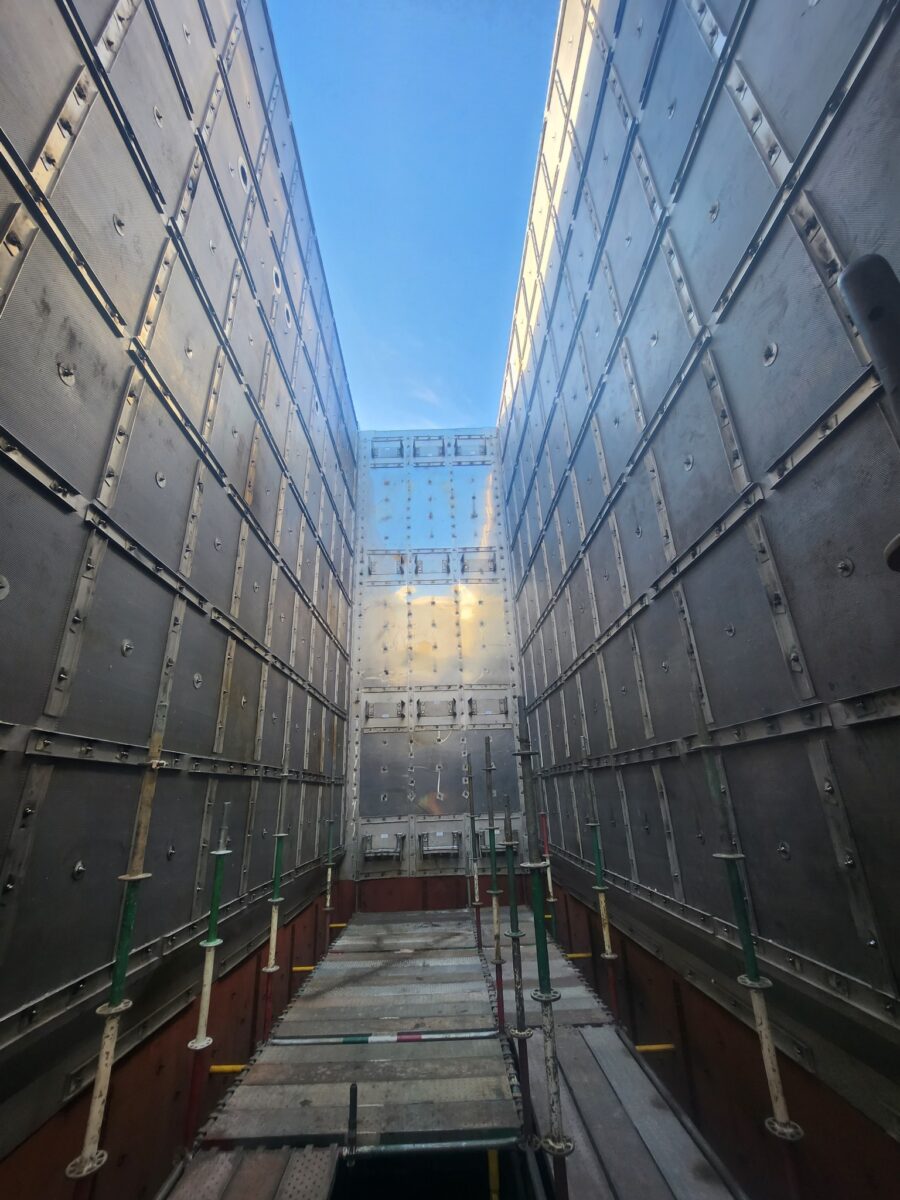
Exhaust liner failure rarely happens at once. In many cases, the damage begins as a relatively small issue: a failed stud weld, loosened liner sheet, or a minor hotspot hidden behind the liner system. But once exhaust flow begins working behind the liner, conditions can quickly deteriorate. What starts out as a manageable repair can develop into widespread liner damage, casing overheating, insulation loss, or even a forced outage.
For gas turbine exhaust systems, HRSGs, and simple-cycle exhaust stacks, liner reliability is critical to both plant availability and long-term structural integrity. Understanding how these failures develop and which warning signs to watch for can help maintenance teams address problems before they lead to major outages.
Why Do Exhaust Liner Failures Escalate So Quickly?
Floating liner systems are designed to handle extreme thermal expansion and turbulent exhaust flow. When functioning properly, the liner protects the outer casing from elevated temperatures while allowing the system to expand and contract during operation.
The challenge is that once part of the liner system fails, the exhaust flow can begin to work beneath adjacent sheets. Turbulent gas flow may then pull additional liner sections loose, triggering a cascading failure. Detached liner material can create several problems at once:
- Additional damage from liberated metal moving through the gas path
- Insulation displacement and downstream contamination
- Increased casing temperatures
- Potential performance losses from restricted exhaust flow
- Safety risks associated with falling debris or internal damage
In HRSG applications, failing liner systems can also affect downstream components, including duct burners, silencers, pressure parts, and catalyst systems. As insulation migrates through the exhaust path, plants may begin experiencing emissions performance issues in addition to mechanical concerns.
The longer repairs are deferred, the more expensive and complex the repair scope often becomes. A localized liner repair completed during a planned outage is significantly different from a large-scale casing repair or forced outage scenario.
What Are the Most Common Floating Liner Failures?
While every system is different, several failure patterns appear repeatedly in the field.
Stud Welding Failures
Stud attachment quality is one of the most critical elements of a durable liner system. Poor weld penetration, improper welding procedures, or cold welds can all lead to premature stud failure.
Once studs begin failing, liner sheets lose support and become more susceptible to vibration, movement, and distortion under exhaust flow.
In retrofit and repair work, proper stud welding procedures are especially important because existing surfaces, field conditions, and material variations can complicate the quality of installation.
Excessive Stud Spacing
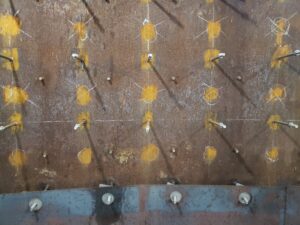
Reducing the number of studs may initially lower material and fabrication costs, but excessive spacing reduces rigidity and increases liner movement during thermal cycling and exhaust flow.
The result is often accelerated fatigue and reduced liner durability over time.
Lack of Edge Stiffening
In many systems, batten channels or similar reinforcement methods are used at liner seams to improve rigidity and maintain proper overlap. Without sufficient stiffening, vibration and turbulent flow can cause liner edges to deform or lift, allowing hot gas intrusion behind the liner system.
The required level of stiffening often depends on the turbulence and temperature profile within a specific section of the exhaust path.
Improper Sheet Sizing
Oversized liner sheets can create expansion problems during operation.
Many liner systems depend on smaller sheet configurations because they allow thermal growth to occur more uniformly. Larger sheets experience greater expansion forces and can be more difficult to manage in floating liner design.
As sheets distort or buckle, the likelihood of flow intrusion and liner separation increases.
Incorrect Sheet Lapping Direction
Sheet lapping direction is another detail that can have major consequences.
Floating liner systems are designed so that upstream sheets overlap downstream sheets, minimizing the likelihood that exhaust flow will catch exposed edges. If the lapping direction is reversed or installed incorrectly, turbulent gas flow can cause the sheets to lift during operation.
Once that process begins, liner degradation can accelerate rapidly.
Early Warning Signs During Outages
Many liner problems can be identified before catastrophic failure if plants know what to look for during planned inspections. Common warning signs include:
- Broken studs or missing hardware
- Insulation displacement
- Visible fiber debris
- Distorted liner sheets
- Corner lifting or deformation
- Signs of thermal stress near joints or transitions
- Areas where exhaust flow may be getting behind the liner
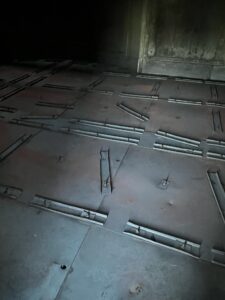
For this reason, many facilities also use periodic thermographic inspections while the unit is operating. Thermal scans can help identify hotspots developing behind the liner system before visible internal damage appears.
Tracking thermal patterns over time provides maintenance teams with a baseline for identifying abnormal temperature increases and planning repairs before larger failures occur.
Preventive Maintenance Starts with Design and Inspection
Not all liner failures are unavoidable wear-and-tear problems. Many of them are tied to design details, installation quality, or delayed maintenance decisions.
Proper stud spacing, weld quality, sheet size, stiffening methods, and liner overlap design all influence durability. Equally important is upholding a proactive inspection strategy, which includes both outage inspections and operational thermal monitoring.
In many cases, catching a developing liner issue early can mean the difference between a planned repair and an unexpected outage during peak demand conditions.
Companies like SVI BREMCO, which specialize in exhaust systems and liner retrofits, often focus heavily on installation quality control, stud-welding verification, and application-specific liner design, because small details in these systems can have major operational consequences over time.
For plant operators, the goal is not simply to repair liner damage after failure occurs. It is identifying the warning signs early enough to prevent the failure from escalating in the first place.