

Written by Bob Morse | Power Plants
SVI BREMCO recently completed a project to replace HRSG duct burners at a combined-cycle plant. These burners are critical for increasing steam production by being installed in the HRSG ductwork. They are especially important during periods of high electricity demand, as they help boost power capacity. Additionally, HRSG duct burners provide the plant with greater operational flexibility and the ability to adjust to varying loads, ensuring efficient performance under changing conditions.
What Type of Duct Burner Work Was Needed?
The duct burner work required for the HRSG retrofit involved several key planning and installation stages. First, a thorough review of the new equipment installation drawings was conducted to ensure alignment with the project requirements. Pre-outage planning with the customer was critical, including discussions on scheduling, responsibilities, and coordination with subcontractors and utility providers.
One important aspect of the project was assessing the layout differences between the new and existing equipment to determine necessary adjustments. Key interfaces, such as gas piping, igniter air, and instrument air connections, were carefully evaluated. Additionally, modifications to the liner system and potential casing adjustments, particularly if the elevation of the new burners differed from the old ones, were identified and planned for to ensure smooth integration of the new components with the existing system.
What Challenges Were Encountered During the Project?
Challenges encountered during the project included:
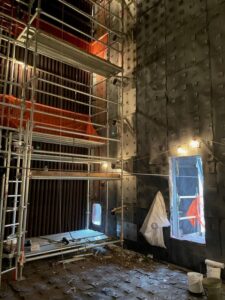
- Access to the HRSG gas path for equipment removal/installation
- A larger access opening was required to remove existing duct burner runners and install new ones.
- Auxiliary equipment such as piping, electrical systems, and stairwells posed difficulties when cutting a temporary access opening, complicating the workflow and requiring careful planning.
- Rigging of existing and new equipment
- Finding suitable structural steel for rigging posed challenges, particularly in tight spaces.
- The SS liner system in the HRSG ductwork often had to be removed to access structural steel and add anchor points for rigging, delaying progress.
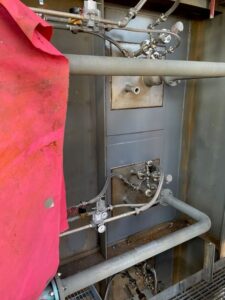
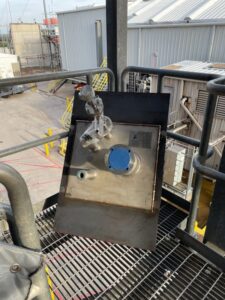
- Dissimilar welds
- New burner fronts were often made of stainless steel (SS), while the HRSG casing was carbon steel, which complicated the welding process and required specialized techniques to ensure durability.
- Scaffolding schedule
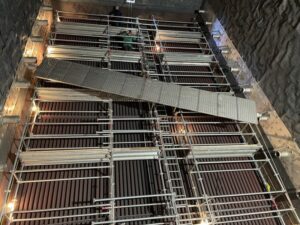
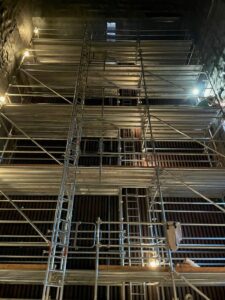
- Scaffolding needed frequent modification and dismantling throughout different stages.
-
- It was necessary to modify the scaffolding to access the duct burner runners, remove it for rigging, and re-erect it to access the welds on both sides of the burners or the liner system, leading to significant coordination efforts.
- Interface of the new SS liner system with the existing liner system
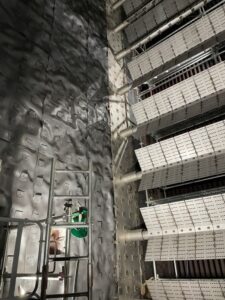
- The existing liner system was often in poor condition, making it difficult to align new flat liner sheets with old, overheated ones for a tight fit, thereby adding time and effort to the installation.
What Solutions Did SVI BREMCO Offer?
The HRSG duct burner replacement was completed successfully through careful planning and problem-solving. SVI BREMCO tackled challenges such as creating larger access openings for equipment and identifying the right structural steel for rigging. Specialized welding techniques were used to securely connect different materials. Scaffolding was managed efficiently, allowing access without delays. Despite the poor condition of the old liner system, the new stainless steel liners were fitted smoothly. Ultimately, the project met its goals, improving plant flexibility and increasing power capacity during periods of high demand.
Does Your Plant Need an HRSG Duct Burner Replacement Like This?
SVI BREMCO designs and implements advanced solutions for HRSG combined-cycle plants’ exhaust duct systems. Whether you need repair or replacement, like this project, the experts at SVI BREMCO can help. Contact us today to schedule our team to inspect your site and recommend potential solutions.