

Written by Braxton Peterson | Plant Maintenance
Penetration seals serve a relatively straightforward purpose on a heat recovery steam generator (HRSG): They allow piping to move through a structure that is otherwise essentially a rigid box. As temperatures rise, the piping expands, and the penetration seal must accommodate that movement while maintaining an effective barrier.
However, the conditions those seals encounter are far from uniform across an HRSG. Temperature, thermal growth, and the amount of movement a seal must repeatedly accommodate can change dramatically from the gas turbine end of the unit to the stack end.
Those differences mean that specifying the same penetration seal design throughout an HRSG can lead to premature failures. A design that provides years of reliable service in one location may be poorly suited for another.
Location Changes the Operating Environment
The front of an HRSG, closest to the gas turbine, experiences the highest temperatures. By the time exhaust reaches the stack end, temperatures have dropped considerably. That temperature difference also affects how much the piping moves.
In the field, penetration seals near the front of a unit may sometimes need to accommodate six, seven, or even eight inches of movement as piping heats and expands. Toward the back of the unit, that movement may be only an inch or two. This creates two challenges for seals at the hotter end of the HRSG. They operate in a more severe thermal environment while also experiencing considerably more movement.
Over time, that repeated movement takes a toll. Metal bellows can eventually crack. Fabric seals repeatedly flex as the piping expands and contracts, eventually wearing or tearing. The effect is similar to repeatedly bending an object back and forth until fatigue causes it to fail. The greater the movement, the more important it becomes to design the seal specifically to accommodate it.
Match Seal Materials to the Temperature
Temperature differences should also influence material selection. For high-temperature applications toward the front of the HRSG, penetration-seal designs may incorporate Teflon fabric, fiberglass wrapping, and ceramic-fiber insulation. The insulation and fiberglass wrapping helps contain heat of the piping, while the fabric provides the flexibility needed to accommodate movement while creating a seal between the pipe and the HRSG.
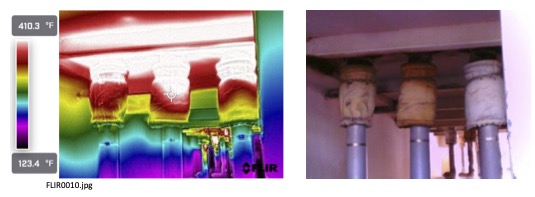
Conditions can be considerably less severe toward the exhaust end. Where temperatures are sufficiently low, silicone fabric may be a viable option. Because silicone does not have the same high-temperature capability as Teflon its suitability depends on the temperature and operating conditions of the specific penetration.
Regardless of material, insulation and the surrounding environment remain important. Even a well-designed seal can have a dramatically shortened service life if nearby insulation, casing, or liner problems expose it to temperatures beyond its design limits.
Movement Can Change the Attachment Design
How the seal is secured is another consideration, particularly in locations with substantial movement.
A banded seal uses a clamping arrangement to secure the fabric around the frame. This approach can perform adequately under the right conditions, but it may not provide sufficient retention for high-movement applications. In those situations, the repeated movement can cause the fabric to slide off the frame.
A bolted design provides more secure retention. Bolts extend through the fabric material and a backing bar with nuts physically secures the assembly in place. For a penetration experiencing several inches of movement, that more secure attachment can make an important difference.
This is also why the age of a failed seal doesn’t necessarily indicate whether the original design was appropriate. In one field example, a customer had a frame that was only about 18 months old. Despite being relatively new, the frame needed to be replaced because its design wasn’t appropriate for the environment where it was installed. Replacing a failed component in kind would simply have recreated the same problem.
A Failed Seal May Be a Symptom
Before replacing a penetration seal, it is also important to determine why it failed. A thermal camera can be particularly useful while the HRSG is operating because it allows maintenance personnel to identify where excessive heat is originating. Evaluation of the seal itself, the surrounding seals, and nearby casing is critical for a proper diagnosis.
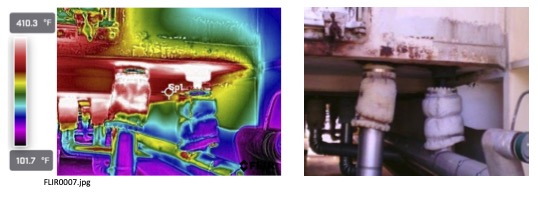
For example, missing insulation, casing problems, or internal liner damage may allow excessive heat to reach the exterior of a penetration seal causing premature failure. Likewise, a failed seal can also expose adjacent seals to additional heat. In these situations, replacing the visibly damaged seal without addressing the underlying thermal problem may provide only a temporary repair.
Field experience demonstrates how significant the difference can be. Properly protected and insulated fabric penetration seals have been observed remaining in service for six to eight years, and occasionally longer. Conversely, new seals installed in excessively hot environments have failed within six months to a year. Those figures aren’t guaranteed service-life expectations. Rather, they illustrate how strongly the surrounding environment can influence seal longevity.
Design for the Individual Penetration
A penetration-seal repair should involve more than identifying a failed component and installing an identical replacement. The location of the penetration, expected thermal movement, surrounding temperatures, condition of the casing and insulation, seal material, and attachment method all deserve consideration.
Sometimes the appropriate solution is simply replacing aged fabric and reinsulating an otherwise sound assembly. In other cases, the evidence points toward a different material, attachment method, or complete redesign.
The important question isn’t simply what type of penetration seal is used elsewhere on the HRSG. It’s what the seal at this location is expected to withstand.
Accounting for those differences during inspection, repair, and design can help plants address the cause of repeated penetration-seal problems rather than continually replacing the component that shows the symptoms.
Find the Right Penetration Seal Solution for Your HRSG
If your HRSG is experiencing repeated penetration seal failures, SVI BREMCO can help identify the underlying cause and develop a solution suited to the specific operating environment. Our team provides inspection, engineering, and custom-designed repair solutions to address thermal movement, excessive heat, and other conditions that can shorten seal life. Contact SVI BREMCO to discuss your HRSG penetration seal needs.