

Written by Scott Schreeg | Power Plants
Combined-cycle power plants are a popular choice in the power industry for electricity generation. They offer greater efficiency than options such as gas or steam turbines alone. The combined cycle power plant (CCPP) involves two cycles, the topping cycle (gas turbine) and the bottoming cycle (steam turbine), which are connected by a heat recovery steam generator (HRSG).
The HRSG is a vital part of the combined cycle power plant. It is essentially a boiler with water and tubes. Instead of releasing exhaust straight into the atmosphere, as in a simple-cycle gas plant, the HRSG converts as much heat as possible from the gas turbine exhaust into steam, which drives the steam turbine, providing additional power and making the plant more efficient.
Because there is a strong interdependence between the topping and bottoming cycles, any failure or fault can spread quickly, leading to drastic reductions in efficiency, accidents, and equipment damage. In a combined-cycle plant, the HRSG requires a fair amount of maintenance due to thermal fatigue, cycling, and other processes. Some components inevitably fail because they are metal. Repairing, replacing, or upgrading these parts during planned outages helps eliminate downtime due to failures and maintain high plant efficiency.
HRSG Components That Commonly Need Repair, Replacement, or Upgrade
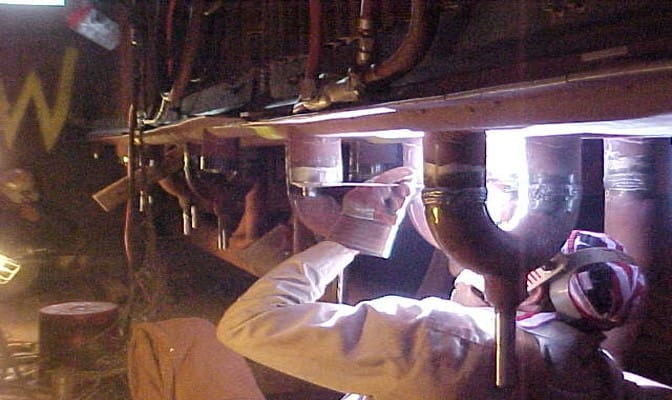
In a combined-cycle HRSG power plant, there are two types of components to consider: gas-path or non-pressure parts and steam-generation or pressure parts, for which repairs may be required.
The gas-path parts involve the flow of turbine exhaust through the ductwork. As it flows through the ductwork, it’s directed through systems, one of which is the boiler tubes themselves. This optimizes heat transfer to deliver as much heat as possible to the water, driving the steam turbine.
Other components in the gas path, such as emissions control systems, often require attention and repair. Newer CCPP sites are required to have emissions control, which you may hear referred to as an FCR and/or a CO system. In the gas path, this is a separate system that interacts with the gas flow to mitigate emissions, ensuring the plant is within its permitted emissions levels.
Additionally, within the gas path, other parts help direct the flow to optimize performance. Besides the boiler tubes and emission systems, you’ll find aerodynamic flow-conditioning elements in the gas path that may need repair or replacement to prevent failure.
Liners are another component where repairs are commonly needed due to the turbulence from the turbine exhaust, thermal fatigue, and heat. Liner systems must be in good repair because they maintain proper OSHA casing temperatures, helping keep power plants in compliance.
Silencers, also called parallel baffles, absorptive baffles, or splitters, are another component of the gas path that may require repair or replacement. While simple cycle systems are much louder at the static exit than combined cycle systems because the flow is attenuated by HRSG boiler tube rows, reducing the need for silencing, large CCPPs have big, noisy turbines; as a result, there’s often still the need for some sort of silencer.
In the steam generation area, which includes pressure parts, various components must be maintained. The tube rows (harps), piping systems, pressure tanks, vent silencers, and valves all have components that can fail, resulting in efficiency losses and unscheduled downtime. Pressurized components must meet ASME standards, so a repair source capable of ASME pressure part work is critical for CCPPs.
SVI Dynamics – Your Go-To Source for Combined Cycle Power Plant Repairs
At SVI Dynamics, we are dedicated to providing exceptional services to our industrial plant clients, including those with combined cycle HRSG power plants. We understand that optimizing all parts of the system is essential to the efficiency and profitability of your plant. Whether you need repairs, replacements, or upgrades, our expert team of technicians and engineers can help. They are knowledgeable in even the most complex maintenance situations.
We are available to test and analyze your power plant’s performance and help develop a plan to mitigate any issues identified. As always, we will work to minimize downtime and increase your plant’s efficiency while ensuring that plant equipment operates safely and complies with all applicable regulations.