

Written by Brad Buecker | Power Plants
While many large power and industrial plants have steam generators for electrical production and process energy needs, many other facilities, such as office buildings, college campuses, airports, etc., have one or more hot water boilers for comfort heating. Even though conditions in heating boilers may be less rigorous than in steam units, heating boilers are still subject to thermal and mechanical stress (and water-side corrosion without proper chemical treatment). SVI BREMCO personnel recently performed significant repairs on a heating boiler at a large international airport.
The Preliminary Work
Many heating boilers have been in service for decades. As such, the units may have been designed with features that are not present or have been modified for more modern boilers. This project’s primary work was repairing and replacing 90-degree tube bends at the furnace floor. These bends connect the boiler tubes to lower headers.
Figure 1. A section of the boiler tube bends before replacement.
The first step was the removal of old asbestos insulation. Asbestos abatement requires careful planning and execution to ensure employee safety. Without proper containment, asbestos fibers will readily spread through the air.
Next came the removal of refractory and fire brick from around the tube bends.

Figure 2. View of a tube section with part of the refractory removed and some remaining. Note the multiple handhold plugs in the header.
Refractory is typically a dense, hard material, and this case was no exception. The repair crew had to employ heavy-duty chipping tools to remove the material. Refractory removal involved both brick and monolithic refractory, and reinstallation required the installation of refractory anchors and plastic refractory with pneumatic hammers in addition to the required firebrick. The crews also installed support bracing to hold the refractory above the repair locations.
Tube Replacement
A key aspect of the project was the fabrication of new tube bends to precise dimensions for reinstallation. Because of the age of the boilers, no tube drawings were available, so tube sections were cut out and transported to a tube vendor who used them as a template to ensure that replacement tubes were bent to the correct angles. Figure 3 shows a row of newly installed tube sections.
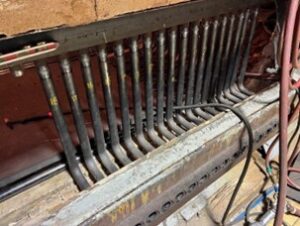
Figure 3. Newly installed tube sections.
As with steam boilers, precision welding techniques were required to ensure installation integrity.
Another important issue revealed itself during the project. Figure 2 shows some of the handhold plugs in place in the lower header, and Figure 3 above illustrates a section of the header with plugs removed. Handhold plugs in high-pressure steam boilers must have welded connections, but in lower-pressure boilers, including this unit, threaded fittings are often acceptable. After all tubes had been installed and the handhold plugs reinserted, the repair team performed a hydrostatic test on the boiler. This test revealed a large leak at one of the handhold plugs, which is yet another example that threaded fittings may become damaged when exercised.
SVI BREMCO Can Help with Your Heating Boiler Repairs
While hot water boilers usually operate at lower pressures than steam boilers, they are still subject to wear and tear that requires regular maintenance. A unit shutdown due to a failure can have drastic consequences. SVI BREMCO has the expert staff to perform this work and keep industrial and large commercial boilers in good working order.